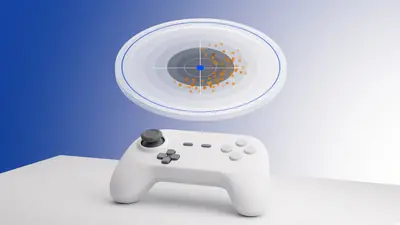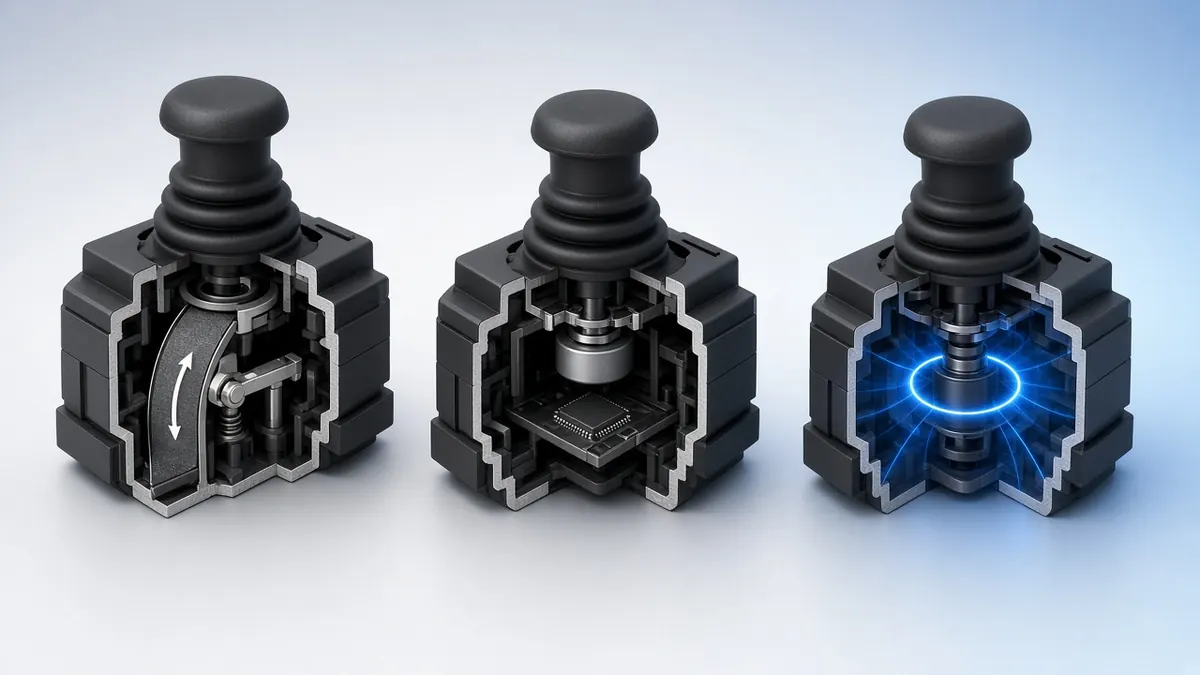
Stick drift has made "Hall effect" a selling point on new controllers. TMR sticks are now appearing too.
Here is how the three sensor types differ, and what that means for drift, precision and battery life.
How Potentiometer Sticks Work
Most first-party pads, including the DualSense and many Xbox controllers, use potentiometers. A small wiper slides across a resistive carbon track as you move the stick.
The resistance tells the controller where the stick is. Because the parts touch, the track wears and dust can get between them. That is the root of most drift.
How Hall-Effect Sticks Work
A Hall-effect stick puts a magnet on the moving part and a sensor below it. The sensor measures the magnetic field, which changes as the stick moves.
Nothing rubs, so there is no track to wear out. That is why Hall-effect sticks resist drift much better over years of use.
What TMR Adds
TMR stands for tunnel magnetoresistance. It also reads a magnet without contact, but the sensor is more sensitive and uses less power than typical Hall sensors.
In practice, TMR sticks aim to combine drift resistance with lower battery drain and fine precision. Replacement TMR modules now exist for some controllers.
Side-by-Side Comparison
| Sensor | Contact wear | Drift risk | Power use |
|---|---|---|---|
| Potentiometer | Yes | Higher over time | Low |
| Hall effect | No | Low | Moderate |
| TMR | No | Low | Low |
Exact results depend on the design, calibration and build quality. A poorly calibrated magnetic stick can still feel worse than a good potentiometer.
How to Check Your Sticks
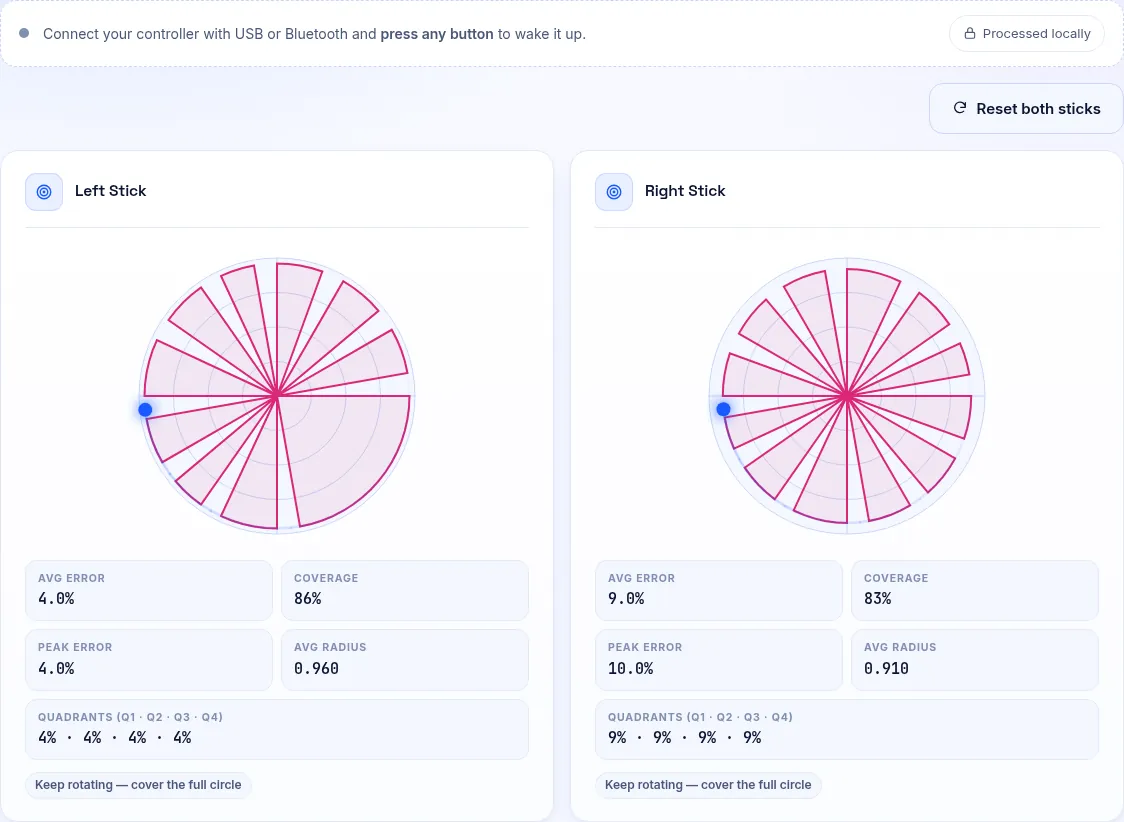
Run our stick drift test and the circularity test. Good sticks of any type rest near zero and trace a round outline.
Repeat the tests every few months. Rising rest values point to wear, which is typical of potentiometers.
Frequently Asked Questions
Can I upgrade my controller to Hall-effect sticks?
Many popular controllers have upgrade kits. Fitting them usually requires desoldering, so consider a repair shop.
Do Hall-effect sticks never drift?
They resist wear-related drift, but calibration errors or nearby magnets can still cause small offsets.