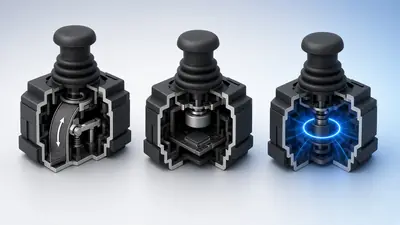
No analog stick reads exactly zero at rest. The question is how far from zero it sits, and whether games will notice.
Here is how to read the numbers from a drift test, with clear thresholds.
What the Numbers Mean
Stick axes run from −1 to +1. A resting value of 0.02 means the stick reports two percent tilt while untouched.
Browsers show these raw values before any deadzone, so you see more noise here than you would in a game.
Normal, Minor and Real Drift
| Peak at rest | What it means |
|---|---|
| Under 0.03 | Normal sensor noise |
| 0.03 – 0.08 | Minor offset; default deadzones hide it |
| 0.08 – 0.15 | Noticeable in games with small deadzones |
| Over 0.15 | Real drift; clean or replace the stick |
These ranges come from repeated measurements of new and used pads. They are guides, not manufacturer specifications.
Why Games Often Hide It
Most games apply an inner deadzone of around 10 to 20 percent. Anything inside it is ignored.
Competitive players lower deadzones for precision, which is when small drift suddenly becomes visible.
How to Measure Yours
Open our stick drift test, put the controller flat on a table and run the 5-second rest test.
Then flick each stick and let go. A healthy stick returns close to the same point every time.
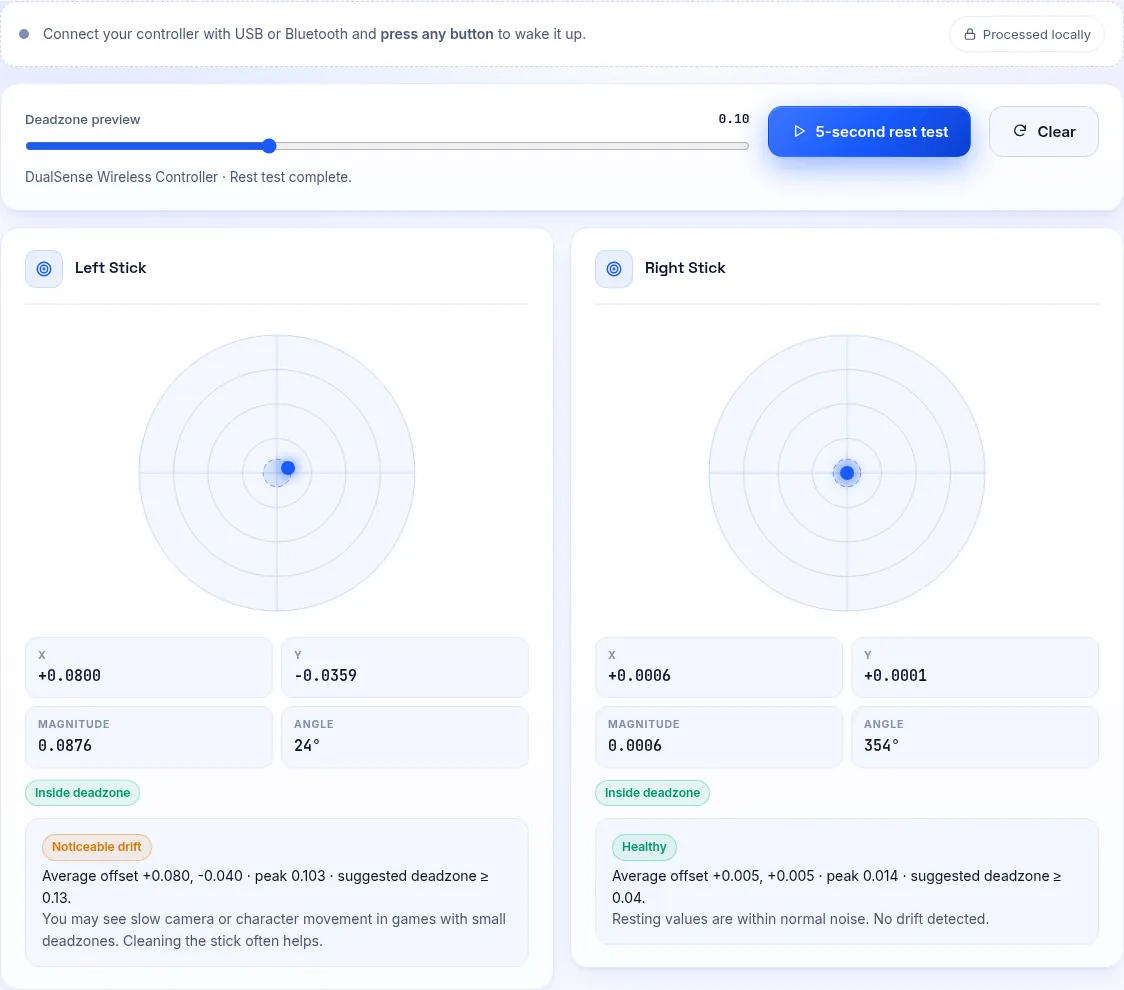
When to Act
If your peak is above your game's deadzone, either raise the deadzone or fix the stick. Our drift repair guide covers both.
Frequently Asked Questions
Is drift on a brand-new controller normal?
Small noise is. Values above about 0.08 on a new pad are worth a return or warranty claim.
Does drift get worse over time?
On potentiometer sticks it usually does, as the tracks wear.